Can the IFAJ help world hunger?
That is the challenge IFAJ president MIke Wilson poses in this thoughtful commentary, written after hearing former Irish president Mary Robinson give the prestigious Michael Dillon Lecture in Ireland. "Robinson believes our organization could mobilize and hold governments accountable, to ensure that the fundamental right to food is available to all. That's the power of the press, and it's a power we don't utilize often enough," Wilson challenges.
http://www.ifaj.org/about/from-the-president/could-ifaj-help-curb-world-hunger.html
IFAJ Congress 2010 - Catch the early bird special
The IFAJ Congress will be early in 2010. Registrations are now open for the event which will be hosted by Belgium, a founding member of the IFAJ, at the popular seaside resort of Ostend, from April 17 to 21. Places are limited so people are encouraged to book soon. An early bird special with discounted rates is available until January 31. For more details and registration in English, French, German or Dutch go to www.ifaj2010.org
People who sign up for the 2010 pre-congress tour will have the chance to explore the Duchy of Luxembourg. The initinerary from April 14 to 17 includes visits to national viticultural and dairy organisations, and the cellars of the most important wine producer "Les Domaines de Vinsmoselle" to taste their unique crémant. A trip to the historic Vianden castle and a boat trip on the Moselle to Schengen are also on the program.
More information...
Ag journalists can highlight food security issues – Robinson
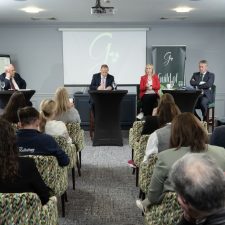
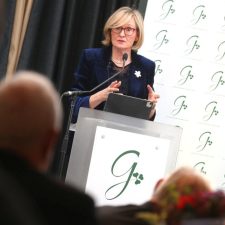
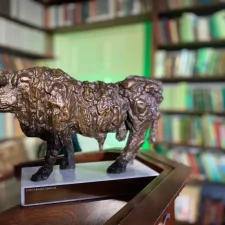
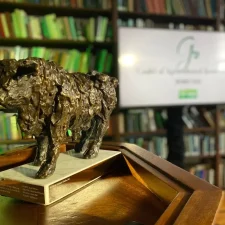
Food security is a major issue for the agricultural community, Mary Robinson told the Guild of Agricultural Journalists’ Michael Dillon Memorial Lecture on November 6, 2009.
She said food security simply means securing enough safe food for all people on the planet. Three quarters of the world’s poorest people live in rural areas and their livelihoods depend on agriculture, and 1bn people are hungry, she told Guild members at the Lecture in the Shelbourne Hotel.
The number of hungry people in the world has risen, she said, from 854m in 2006 and 840m in 2003.
On top of these staggering numbers, more than 2bn people around the world suffer from so called ‘hidden hunger’, or micronutrient malnutrition, she said. Such ‘hidden hunger’ results in children who fail to develop normally their physical and intellectual capacities both suffering as a result.
She said every part of society needs to reflect on the values that shape the world we live in - governments, the scientific community, business and civil society – and address the urgent challenges of our times. “Together we can make a difference. I believe that human rights, and specifically the human right to food, provides both the ethical underpinning and legal framework needed to achieve the objective of ensuring adequate food for all.”
The current economic crisis, she said, is affecting the developing world three fold: by reducing the scope for traditional coping mechanisms such as currency devaluation, borrowing or increased use of official development assistance or migrant remittances.
Second, she said, the economic crisis comes on top of a food crisis that has already strained the coping strategies of the poor, hitting those most vulnerable to food insecurity when they are down. “Faced with high domestic food prices, reduced incomes and employment and having already sold off assets, reduced food consumption and cut spending on essential items such as health care and education, these families risk falling deeper into destitution and the hunger-poverty trap.”
The third factor, she said, that differentiates this crisis from those of the past is that developing countries have become more integrated, both financially and commercially, into the world economy than they were 20 years ago, making them more vulnerable to changes in international markets.
“Food security is ‘the right of everyone to have access to safe and nutritious food’.” This means, she said, that the right to food obligates governments to ensure that adequate food is available, and that all people within their jurisdiction have access to food.
Agriculture, she said, is the critical link between food security and the environment. And the Guild of Agricultural Journalists is mandated to support and encourage the practice of agricultural journalism in countries embracing freedom of the press. “That makes it, and therefore you, an organisation that has a vital voice in these challenging times. This voice can be used to help mobilise and hold Governments and societies accountable, to ensure that the fundamental right to food, and indeed dignity, is available to all.”
She pointed to the World Summit on Food Security which takes place on November 18, and asked that agricultural journalists worldwide will focus on the commitments made there and how they are implemented.
Mary Robinson discussed food security and the role of agriculture at the 2009 Michael Dillon Memorial Lecture. Michael Dillon died in 1992, after a hugely successful career in agricultural journalism that lasted more than 40 years. He was noted as a writer and broadcaster with a constructive approach to farming and the many changes that he saw happen throughout his lifetime.
Mary Robinson said she remembered Michael Dillon’s distinct voice on the radio and asking her father what he was talking about. However, she said the local references made in an intimate tone, made for a strong sense of community and one which she still comes across today in countries such as Liberia.
Stan McCarthy, on behalf of Kerry Group, said Mary Robinson continues to offer moral guidance and vision to the global rights movement through her numerous activities and leadership roles.
Belgium hosts 2010 IFAJ congress
Next year the IFAJ congress takes place in Belgium, which is sure to attract a large European contingent.
Home to Brussels, the heart of EU policy, Belgium is one of the wealthiest and most densely populated countries in the world, and is home to European agricultural policy.
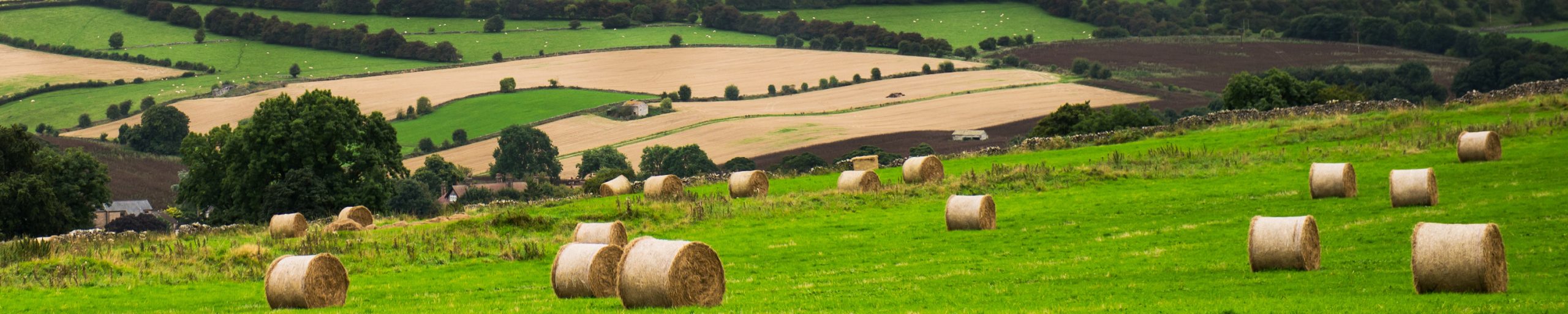
Belgian agriculture is known for its great product diversity, from the areas of vegetable and ornamental plant cultivation, both in the open and under glass, to cattle breeding and arable farming. It owes its existence to the fertile soil, modern technology and hard work.
Belgium has the richest sugar beet fields of Europe, and has acquired a worldwide reputation for its Belgian Blue cattle, Belgian endive, Brussels sprouts, Belgian pork etc. Belgium also boasts an efficient subcontracting and food industry. It is famous for its more than a thousand beers, sprung from both the world’s largest and smallest breweries.
Taking place on April 17-20, the Irish Guild will provide further details closer the time to anyone interested in traveling. Further details are currently available at http://www.ifaj2010.org/